New Patients
Existing Patients
New Patients
Existing Patients
New Patients
Existing Patients
New Patients
Existing Patients


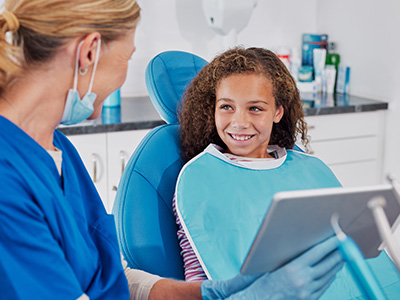
Our goal is to make your child's first visit a positive one and create a comfortable, caring dental home that provides the resources your little one needs to establish good oral health.
The eruption of your baby's first tooth represents an important milestone in their development and an excellent time to establish a strong foundation for a lifetime of good oral health. For this reason, The American Academy of Pediatric Dentistry recommends scheduling a visit with a pediatric dentist "by age one or within six months after the first tooth erupts." However, as things stand, many babies do not get brought to the dentist until they are a bit older, or a problem arises.
Beyond the apparent functions of helping your child chew and speak, baby teeth also play an essential role in the future development of your little one's smile. Acting as placeholders, this first set of primary teeth helps to guide the permanent ones into their proper positions as they erupt into place. Because your child's baby teeth are immediately susceptible to tooth decay, you must start keeping your child's smile clean and healthy from the moment they appear in the mouth.
As skilled and compassionate providers of care, we're aware of children's unique dental needs and can help your little ones become accustomed to sitting in the dental chair from the earliest age. Every member of our staff has experience working with young children and knows just how to make them feel engaged and at ease.
From your child's very first visit, we'll advise you on the most effective methods of keeping their teeth clean and discuss the foods, beverages, and harmful oral habits that can lead to dental problems. While getting children into a regular oral hygiene routine can be challenging, we'll give you tips and advice on brushing their teeth to help make this practice a fun part of their daily activities. And, as your child grows, we keep an eye on dental and jaw development, providing preventive care as well as any other indicated services along the way.
To help keep your child's smile healthy and bright, we recommend checkups twice a year. In this way, we can examine your child's smile to assess oral health and development as well as check for any emerging conditions. By providing preventive care and treatment for any issues early in their onset, we can help your child enjoy the benefits of optimal oral health.


The American Academy of Pediatric Dentistry recommends that children see a dentist by their first birthday or within six months after the first tooth appears. Early visits help detect problems, establish healthy habits, and create a dental home where your child feels comfortable. Scheduling a first visit soon after the first tooth erupts gives the dentist a chance to review feeding, cleaning, and fluoride needs with caregivers.
At Myers Pediatric Dentistry & Orthodontics, we encourage families to bring infants even if no problems are present so we can offer guidance and begin preventive care. Starting early also reduces the likelihood of later anxiety by making visits familiar and positive. If concerns arise before age one, reach out sooner so we can evaluate and recommend appropriate care.
A first visit typically includes a gentle visual exam of the mouth, an assessment of tooth eruption, and a check for signs of decay or developmental concerns. The clinician will observe bite relationships, soft tissues, and habits such as thumb-sucking or pacifier use. Caregivers receive practical instruction on cleaning techniques, diet, and ways to prevent early childhood caries.
Visits for very young children are usually brief and focused on education rather than treatment. The team uses age-appropriate communication and tools to keep the experience calm and efficient. If a problem requires follow-up, the dentist will explain the next steps and timing in clear, family-centered terms.
Primary teeth help a child chew, speak clearly, and maintain the space needed for permanent teeth to erupt properly. They serve as placeholders that guide alignment and jaw development during growth. Because baby teeth are susceptible to rapid decay, protecting them supports long-term oral health and development.
Maintaining healthy primary teeth reduces the risk of pain, infection, and early loss that can complicate orthodontic development. Regular exams and preventive care allow the dentist to monitor growth and intervene early when necessary. Parents play a key role by supervising brushing, limiting sugary snacks and drinks, and following professional guidance.
Start preparing at home with simple, positive activities like reading dental books, role-playing a visit, or letting your child handle a toothbrush. Keep explanations brief and upbeat, and avoid using words that imply pain or punishment. Schedule the appointment at a time when your child is typically well-rested and cooperative.
On the day of the visit, bring a familiar toy or blanket and arrive a few minutes early to complete forms and settle in. Dress your child in comfortable clothing that makes it easy for them to sit in the dental chair. Stay calm and supportive during the appointment; children pick up on caregiver emotions and respond best to relaxed reassurance.
Preventive services for infants and toddlers focus on early detection and education, including gentle cleanings, fluoride varnish when appropriate, and eruption evaluations. Sealants are discussed for older children when molars have erupted and risk factors indicate benefit. The dental team provides anticipatory guidance on diet, oral hygiene, and ways to reduce cavity risk.
Routine preventive care is tailored to each child's needs and can be adjusted as teeth erupt and habits change. Teachers and caregivers receive practical tips to reinforce healthy routines between visits. When a problem is identified, the dentist explains treatment options and timing in a straightforward, age-appropriate way.
For most children, the standard recommendation is a dental checkup every six months to monitor oral health and deliver preventive care. Regular visits allow the team to detect early signs of decay, track eruption patterns, and reinforce home care habits. Some children with higher decay risk or special health needs may require more frequent appointments determined by the dentist.
Orthodontic growth patterns are observed over time so the dentist can recommend appropriate interceptive care or a specialty referral when indicated. Keeping scheduled visits helps the practice catch changes early and coordinate care efficiently. Your child's dentist will outline a personalized recall schedule based on their oral health and developmental findings.
Bring any completed patient forms, a list of current medications, and relevant medical or allergy information so the dental team can provide safe, individualized care. If your child has had prior dental records or X-rays, bringing those can help the dentist review past findings and avoid unnecessary duplication. Prepare a list of questions or concerns you want to discuss during the appointment.
Pack a comfort item and a snack if the office visit coincides with usual feeding times, and plan to arrive a few minutes early to settle your child. Avoid giving sugary treats immediately before the appointment and aim to brush your child's teeth at home if possible. If your child uses a pacifier or bottles at night, be ready to discuss these habits so the team can offer guidance.
The practice creates a child-friendly environment with staff trained in behavior guidance techniques such as tell-show-do, distraction, and positive reinforcement. These approaches help children understand what to expect and reduce fear by building trust at their own pace. Team members are experienced in adapting communication to different ages and developmental levels.
Parents can support a comfortable visit by remaining calm, using neutral language, and offering praise for cooperative behavior. For children with greater anxiety or special needs, the dentist will discuss strategies and, when appropriate, explain options for additional support during treatment. The goal is to make the first visit a positive foundation for ongoing dental care.
At the first visit clinicians evaluate facial growth, jaw relationships, tooth eruption patterns, and occlusion to establish a baseline for development. The dentist will note habits such as thumb-sucking, prolonged pacifier use, or mouth breathing that can influence jaw and dental development. Early identification of growth concerns allows timely guidance or referral to a pediatric specialist when needed.
Regular monitoring across routine visits helps the dental team determine whether interceptive orthodontics or other interventions may be beneficial. When appropriate, the practice will coordinate care with orthodontic specialists to support healthy jaw and bite development. Families receive clear information about expected milestones and signs to watch as their child grows.
To schedule your child's first visit, call the New Patients line for the office you prefer or use the online appointment request if available. Our Middleburg location is at 3200 Old Jennings Rd., Middleburg, FL 32068, and the Jacksonville office is at 3267 Hodges Blvd., #13, Jacksonville, FL 32224. New patient phone numbers are (904) 425-2311 for Middleburg and (904) 425-7310 for Jacksonville.
Office hours are generally Monday through Thursday 8 a.m. to 5 p.m. with a lunch break, and the offices are closed on Fridays and Saturdays, so please check with the specific office when calling. To make scheduling easier, have your child's basic health information and a list of questions ready when you call. If you prefer, contact Myers Pediatric Dentistry & Orthodontics to confirm availability and any forms you can complete before the visit.

Ready to schedule your child’s next dental visit or have questions about our services?
Contacting Myers Pediatric Dentistry & Orthodontics is simple! Our friendly team is here to help with scheduling appointments, explaining treatments, and answering any questions you may have. Whether you’d like to call, email, or use our easy online form, we’re ready to make your child’s dental experience positive and stress-free. Reach out today and give your little one a healthy, happy smile!

Back to top