New Patients
Existing Patients
New Patients
Existing Patients
New Patients
Existing Patients
New Patients
Existing Patients


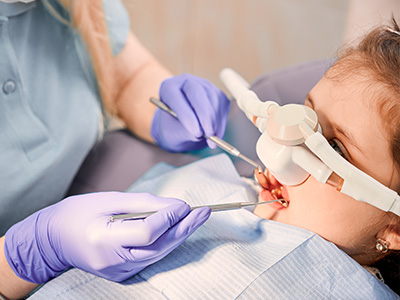
Nitrous oxide, often called laughing gas, is a mild inhaled sedative used to help patients feel relaxed during dental care. The gas is delivered through a soft mask placed over the nose, and its effects are noticeable within moments. Most patients describe a sense of calmness, lightness, and reduced awareness of discomfort while remaining fully conscious and able to respond to instructions from the dental team.
The sedative effects are dose-dependent and quickly adjustable, which allows the provider to tailor the experience to each child’s needs. Because the gas is inhaled and exhaled, it does not have the lingering grogginess associated with some other sedative methods. This rapid on-and-off action makes nitrous oxide particularly convenient for shorter procedures or for patients who need stepped-up support for anxiety.
Importantly, nitrous oxide does not produce complete sleep. Patients keep their protective reflexes and can breathe on their own while maintaining the ability to talk and follow directions. That combination of relaxation plus responsiveness helps dentists work safely and effectively while keeping a child comfortable throughout routine cleanings, minor restorations, or dental X-rays.
For many kids, the first few dental visits set the tone for a lifetime of oral health. Nitrous oxide can make those early experiences less stressful by reducing fear and easing muscle tension without changing consciousness. Because it’s noninvasive and delivered through a small nasal mask, it’s often well tolerated by young patients who might otherwise resist treatment due to anxiety.
Using nitrous oxide helps build trust between the child and the dental team. When a child feels calm and safe, clinicians can more easily complete preventive care like fluoride treatments, sealants, or small fillings that might be difficult when a child is tense or upset. Over time, these positive visits can reduce the need for stronger sedation methods by creating more cooperative and confident patients.
Families often appreciate that nitrous oxide allows the child to recover quickly and return to normal activities shortly after the appointment. That predictability reduces disruption to daily routines and makes follow-up visits simpler. In our practice, the goal is always to combine effective clinical care with experiences that support a child’s long-term comfort with dental visits.
Nitrous oxide has a strong safety record when administered by trained dental professionals who follow established protocols. During use, vital signs and oxygen levels are monitored as needed, and the dental team watches for any signs of distress. Because the sedative is inhaled, the team can adjust the concentration immediately, responding to the patient’s comfort level in real time.
Before recommending nitrous oxide, the provider will review medical history, known allergies, and any current respiratory issues that might affect safety or tolerance. Open communication about recent illness, asthma, or other medical concerns helps the team choose the best approach for a child’s comfort and well-being. When used appropriately, nitrous oxide minimizes risk while providing reliable relief from anxiety.
After the gas is stopped, oxygen is typically provided for a few minutes to help clear the inhaled sedative. Most children appear alert and ready to leave the office within a short time, which is why nitrous oxide is commonly used for outpatient dental care. Throughout the visit, clinicians maintain a calm, controlled environment to support both safety and a positive experience for the patient.
Nitrous oxide is especially helpful for children who are nervous about the dentist, have had difficulty with past appointments, or need help staying still during a procedure. It’s also useful for younger patients who need more support than distraction techniques alone can provide. That said, it’s not a one-size-fits-all solution; the dental team evaluates each child’s medical history, behavior, and the complexity of the planned treatment before recommending nitrous oxide.
In some cases, nitrous oxide is used alongside behavioral guidance, tell-show-do techniques, or topical/local anesthesia to address both comfort and pain control. For more complex procedures or patients with severe anxiety, the dental team may discuss other sedation options; nitrous oxide can still play a role in the overall plan by helping the child remain calm during exams and preparatory steps.
Parents are encouraged to share any concerns about past breathing problems, medication use, or developmental conditions during the pre-visit conversation. That information helps the dentist determine whether nitrous oxide alone is appropriate or whether an alternative strategy will better meet the child’s needs while preserving safety and comfort.
Preparation for a nitrous oxide visit is straightforward. Your dentist will review medical history and explain the process so both parent and child know what to expect. Because the sedation works quickly and wears off rapidly, most patients can resume normal activities after a brief recovery period at the office. There’s no need for prolonged observation or special transportation in routine cases, but the team will provide tailored guidance if a child has coexisting health concerns.
During the appointment, the clinician will fit a gentle mask and encourage slow, calm breathing. The child may feel a floating or tingling sensation as the gas takes effect; these sensations are harmless and typically reassuring. If the child needs more support, the provider can increase the concentration or pause for a few minutes—this control helps maintain comfort without compromising responsiveness.
At Myers Pediatric Dentistry & Orthodontics, we prioritize clear communication and careful monitoring to make nitrous oxide a positive option for many families. If you’d like to learn whether nitrous oxide is a good fit for your child, please contact us for more information. Our team can explain the process, discuss medical considerations, and help you plan a visit that supports a calm, successful dental experience.


Nitrous oxide, often called laughing gas, is a mild inhaled sedative used to reduce anxiety and promote relaxation during dental care. It is delivered through a soft nasal mask and begins to take effect within moments, producing a sense of calm while the patient remains awake. The concentration is adjustable, allowing the dental team to tailor sedation to the child’s comfort and the needs of the procedure.
Because nitrous oxide is inhaled and exhaled, it is eliminated quickly from the body and rarely causes lingering grogginess. Patients typically keep protective reflexes and can respond to verbal instructions, which supports safe, cooperative care. This fast onset and offset make nitrous oxide especially helpful for short appointments and routine treatments.
Children commonly report feeling relaxed, light, or pleasantly detached while under the influence of nitrous oxide, though experiences vary by child. Some kids notice a tingling or warm sensation and reduced awareness of discomfort, yet remain able to talk and follow directions from the dental team. The environment stays controlled and responsive because providers can adjust the level of sedation in real time.
These sensations are generally reassuring rather than disorienting, and most children find them comfortable and nonthreatening. Because memory and consciousness are typically preserved, cooperation and communication remain possible throughout the visit. The predictable recovery profile also helps children resume normal activities soon after leaving the office.
Nitrous oxide has a strong safety record when administered by trained dental professionals who follow established protocols and monitor patients appropriately. Vital signs and oxygenation may be observed as needed, and the concentration of nitrous oxide is adjusted to maintain comfort without compromising breathing or protective reflexes. Before treatment, the dental team reviews medical history and any respiratory or other health concerns to confirm the technique is appropriate.
Short-term side effects are uncommon and often mild, and the quick elimination of the gas reduces the risk of prolonged sedation. Children with certain medical conditions, recent illnesses, or specific respiratory problems may need alternative approaches, which is why thorough pre-visit screening and open communication are important. When used under professional oversight, nitrous oxide is a reliable option for many pediatric patients.
Nitrous oxide is especially useful for children who experience dental anxiety, have difficulty sitting still for short procedures, or need support to accept preventive treatments like cleanings and sealants. It is often well tolerated by younger patients who might resist treatment when anxious, and it can help build positive associations with dental visits. The dental team evaluates behavior, medical history, and the planned treatment to determine suitability on a case-by-case basis.
Children with controlled chronic conditions and a clear airway commonly tolerate nitrous oxide without issue, but patients with certain respiratory infections, uncontrolled asthma, or other specific medical concerns may require delay or an alternative sedation plan. The clinician will discuss any limitations and recommend the safest, most effective approach tailored to each child. Parental input about prior reactions to sedation or breathing problems is important during planning.
Administration begins with fitting a soft mask over the child’s nose and delivering a blended mix of nitrous oxide and oxygen. The dental team carefully titrates the concentration to achieve the desired level of relaxation while monitoring the patient’s responses and adjusting as needed. Throughout the procedure, clinicians observe the child’s color, breathing, and ability to follow instructions to ensure safety and comfort.
Once the clinician stops the nitrous oxide, 100 percent oxygen is often provided for a few minutes to help clear residual gas and support rapid recovery. Most children appear alert and ready to leave the office shortly after this recovery period. Detailed documentation of sedation and monitoring is maintained to support professional oversight and continuity of care.
Yes. Nitrous oxide is commonly combined with behavioral guidance, distraction techniques, and tell-show-do approaches to maximize cooperation and comfort during dental visits. It can also be used alongside topical or local anesthesia to manage both anxiety and procedure-related discomfort, allowing clinicians to perform restorative work safely and effectively. For more complex cases, nitrous oxide may be one component of a broader sedation plan devised by the dental team.
When additional sedation or anesthesia methods are under consideration, the clinician will review medical history, procedure complexity, and the child’s behavioral needs to develop an appropriate plan. Communication with parents about expectations and safety measures helps determine whether nitrous oxide alone is sufficient or whether other options should be discussed. The goal is always to balance comfort, pain control, and safety for each child.
Preparation is straightforward: provide the dental team with an accurate medical history, including recent illnesses, asthma, or current medications, and follow any specific instructions the office provides before the visit. Generally, children should eat lightly and avoid heavy meals immediately before sedation unless the office gives different guidance for a particular situation. Arrive on time so the team can complete necessary pre-treatment screening and explain the process to both parent and child.
Open communication about any past reactions to sedation, anxiety triggers, or developmental considerations helps the clinician tailor the experience. Parents should plan to remain available during the appointment and be prepared to follow any post-visit guidance the team provides. Clear expectations reduce stress and support a smooth, positive visit for the child.
After the nitrous oxide supply is discontinued, the child will typically receive oxygen for a few minutes to help clear the gas from the lungs and restore normal sensation. Most children become alert quickly and can return to their usual activities with minimal delay, as lingering drowsiness is uncommon. The dental team will confirm the child is sufficiently recovered and provide any specific aftercare instructions related to the dental procedure itself.
Because nitrous oxide wears off rapidly, special transportation arrangements are usually not required for routine cases, though the clinician may advise otherwise if medical conditions warrant extra caution. If a child experiences unexpected symptoms after leaving the office, parents should contact the dental team for guidance. Clear post-visit instructions help families know when to seek further evaluation.
Most side effects of nitrous oxide are mild and short-lived, such as nausea, dizziness, or a headache in a small number of patients. Serious complications are rare when the gas is administered by trained professionals who follow monitoring and screening protocols. The dental team will review any specific risk factors during the pre-visit assessment to minimize potential problems.
Certain conditions, including recent upper respiratory infections, uncontrolled breathing disorders, or specific medical issues, may contraindicate nitrous oxide or require modified planning. Parents should share accurate medical histories and report any recent illnesses or concerns so the clinician can recommend the safest option. When used appropriately, nitrous oxide offers reliable relief from anxiety with a low risk profile.
The decision is individualized and based on the child’s medical history, behavior, level of anxiety, and the complexity of the planned dental work. During the consultation, the clinician will discuss the benefits and limitations of nitrous oxide, review possible alternatives, and consider parental input to reach a shared plan that prioritizes safety and effective treatment. This collaborative approach helps ensure the chosen method supports a positive dental experience and good clinical outcomes.
If you have questions or want to learn whether nitrous oxide is appropriate for your child, please talk with our team at Myers Pediatric Dentistry & Orthodontics. We will explain the process, evaluate medical considerations, and recommend the approach that best meets your child’s needs while maintaining safety and comfort.

Ready to schedule your child’s next dental visit or have questions about our services?
Contacting Myers Pediatric Dentistry & Orthodontics is simple! Our friendly team is here to help with scheduling appointments, explaining treatments, and answering any questions you may have. Whether you’d like to call, email, or use our easy online form, we’re ready to make your child’s dental experience positive and stress-free. Reach out today and give your little one a healthy, happy smile!
Back to top