New Patients
Existing Patients
New Patients
Existing Patients
New Patients
Existing Patients
New Patients
Existing Patients


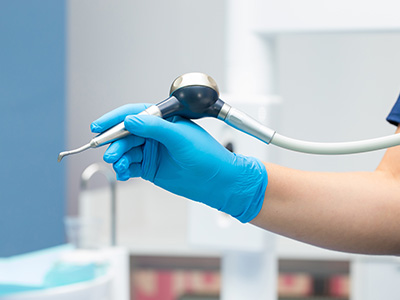
Air abrasion is a tooth-conserving technique that removes decay and surface irregularities using a focused stream of air and microscopic abrasive particles. Instead of the rotating motion of a drill, air abrasion uses compressed air to propel an inert abrasive—often aluminum oxide—at the targeted area. The impact of those particles dislodges softened enamel and dentin so the clinician can clear decay without cutting away healthy tooth structure. The process is precise, controlled, and designed to be as conservative as possible.
At a mechanical level, air abrasion functions much like a tiny sandblaster, but it is calibrated for dental use. The tip is aimed at the lesion while a suction system immediately captures debris and used particles, keeping the oral environment clean and free of dust. Because the removal is incremental and visual, the dentist can stop when only healthy tooth remains, preserving more of the natural anatomy than many traditional techniques.
Clinically, the result is a smoother, less invasive preparation that can be ideal for small cavities, sealant preparation, or cosmetic spot treatments. Air abrasion does not rely on heat or vibration in the same way drills do, which changes the patient experience and the kinds of restorative work that follow. It has become a valuable option in modern pediatric and preventive dentistry because it emphasizes preservation and comfort.
Children often respond poorly to loud noises and strong vibrations, both of which are common with traditional rotary instruments. Air abrasion produces neither of those stimuli—it operates quietly and without the pulsing sensation that can make dental visits stressful. Reducing sensory triggers helps children remain calm and cooperative, which in turn allows clinicians to work more efficiently and with less need for repeated interventions.
Because the technique removes only the decayed tissue and leaves healthy enamel intact, many children can avoid injections of local anesthesia for minor procedures. For families who worry about needles or numbing shots, air abrasion can be an attractive alternative that reduces the physical and emotional burden of treatment. The combination of reduced noise and less frequent anesthesia contributes to a more positive dental experience.
Beyond comfort, air abrasion supports long-term dental health by minimizing unnecessary removal of tooth structure. Preserving more natural tooth helps maintain strength and reduces the likelihood of future restorative cycles that larger preparations can create. For growing teeth, that conservative philosophy is especially important: keeping as much natural tooth as possible supports proper development and future treatment options.
Air abrasion is most commonly used for small to medium-sized cavities, particularly those caught early during routine exams. It's also an excellent tool for preparing enamel before applying dental sealants or bonding adhesives, since the micro-roughening produced by the particles helps materials adhere more predictably. In these roles, air abrasion acts as both a treatment and a preparatory step that improves outcomes for minimally invasive restorations.
In addition to decay management and sealant preparation, air abrasion can be used for removing superficial stains and localized enamel discoloration. Because it operates without removing large amounts of tooth, it’s often chosen when the goal is cosmetic refinement rather than structural alteration. This makes it useful for spot treatments on front teeth and for polishing areas that have mild staining without weakening the tooth.
Despite its advantages, air abrasion has defined limitations. It is not the ideal choice for large cavities, extensive decay beneath existing restorations, or cases that require bulk removal of material. In those situations, conventional rotary instruments, sometimes combined with other techniques, provide the access and control needed to complete more complex restorations safely and predictably. Your dentist will recommend the best approach based on the size, location, and extent of the problem.
When used within its appropriate scope, air abrasion can shorten treatment time for minor procedures and reduce the overall invasiveness of care. It’s a complementary tool rather than a replacement for all restorative methods, and part of its strength lies in how well it integrates with adhesive dentistry and modern, tooth-preserving philosophies.
During an air abrasion procedure, the team will take steps to make the child comfortable and informed. The clinician will explain the process in age-appropriate language and may demonstrate the equipment before beginning. Protective measures include high-volume suction to capture debris and safety eyewear for the child and staff. Because the procedure generates minimal heat, there is usually no need for an insulating barrier or extended cooling periods.
The sensation during treatment is different from what most patients expect from a dental visit. Children generally describe it as a light tapping or a dry, slightly gritty feeling rather than pressure or vibration. The absence of buzzing, heavy pressure, and strong smells often makes the experience more tolerable, and many children can remain relaxed enough to complete the procedure in a single visit.
Post-treatment care is typically straightforward. There may be a brief adjustment period as the child’s mouth returns to normal sensation if topical agents were used, but eating and drinking can usually resume quickly unless the dentist provides specific instructions. Any subsequent restoration—such as a bonded filling or sealant—will follow standard protocols so the treated tooth is protected and functions normally.
Our practice emphasizes comfort, safety, and minimally invasive principles when treating young patients. Air abrasion fits naturally into that approach because it aligns with preventive goals and often reduces the need for more aggressive interventions. The technique is one of several tools used to tailor treatment to each child’s needs, age, and behavior, ensuring a personalized plan that balances long-term oral health with a positive dental experience.
Clinicians trained in pediatric care consider the whole child—not just the tooth—when recommending air abrasion. That means evaluating behavior, anxiety levels, and the extent of dental disease in addition to clinical findings. For appropriate cases, air abrasion allows us to intervene early, address minor problems efficiently, and create a foundation for consistent, preventive care as your child grows.
Myers Pediatric Dentistry & Orthodontics brings that child-centered perspective to every visit, selecting techniques that preserve tooth structure and support confidence in the dental chair. Whether the goal is to prepare teeth for sealants, remove small areas of decay, or address superficial cosmetic concerns, air abrasion is a modern, child-friendly option that complements our broader commitment to gentle, effective care.
In summary, air abrasion is a conservative, low-noise method for treating early decay, preparing teeth for adhesives, and addressing minor enamel blemishes—especially useful in pediatric settings where comfort and preservation matter. If you’d like to learn whether air abrasion is appropriate for your child, please contact us for more information and guidance tailored to your family’s needs.


Air abrasion is a conservative dental technique that removes decay and surface irregularities using a focused stream of compressed air and microscopic abrasive particles. Instead of a rotating bur, the device propels an inert abrasive, commonly aluminum oxide, to dislodge softened enamel and dentin in small, controlled increments. The goal is to remove only diseased tissue while preserving as much healthy tooth structure as possible.
Mechanically, air abrasion functions like a finely tuned sandblaster designed for dental use, with a small tip aimed at the lesion and an integrated suction system that immediately captures debris. Because the process is visual and incremental, the clinician can stop when only sound tooth remains, producing a smoother, more conservative preparation. That precision makes air abrasion a useful tool in minimally invasive and adhesive-oriented dentistry.
Air abrasion operates quietly and without the strong vibrations associated with rotary instruments, which helps reduce the sensory triggers that often make dental visits stressful for children. The absence of loud buzzing and heavy pressure often allows young patients to remain calmer and more cooperative during the procedure. This decreased anxiety can make the visit more efficient and less traumatic for both the child and the family.
Because the technique targets only decayed tissue and preserves healthy enamel, many minor procedures performed with air abrasion can be completed without local injections, reducing the need for needles in appropriate cases. Avoiding unnecessary removal of tooth structure also supports long-term oral health and future treatment options for developing teeth. Overall, air abrasion aligns with child-centered care principles by emphasizing comfort, preservation, and a positive dental experience.
Air abrasion is most effective for small to medium cavities, particularly those caught early on smooth surfaces or in pits and fissures during routine exams. It is also commonly used to prepare enamel before placing dental sealants or bonding restorations, because the micro-roughening created by the particles improves adhesive retention. In addition, air abrasion can remove superficial stains and localized enamel discoloration when conservative cosmetic refinement is the goal.
That said, air abrasion is a complementary tool rather than a universal solution; it excels in situations that require precise, minimal removal of tooth structure. It is ideal for preventive and early restorative care where adhesive materials will be used, and for spot treatments on front teeth where preservation is important. Your dentist will recommend air abrasion when it is the most appropriate option for the specific clinical situation.
No. While air abrasion offers significant advantages for certain types of lesions, it is not a complete replacement for rotary instruments in all situations. Large cavities, extensive decay beneath existing restorations, deep carious lesions close to the pulp, or cases that require bulk removal of material typically need the access and mechanical control that traditional rotary instruments provide.
Air abrasion is best viewed as part of a modern, minimally invasive toolkit that complements drills and other techniques. Dentists select the method or combination of methods that provide safe, predictable outcomes based on the size, location and extent of the problem, as well as the child’s behavior and clinical needs. In many practices, using air abrasion when appropriate reduces the overall invasiveness of care without eliminating the need for other proven restorative approaches.
In many cases air abrasion allows clinicians to avoid local anesthesia for small, shallow lesions because the method produces minimal heat, pressure and vibration. The sensation is often described as light tapping or a dry, gritty feeling rather than the strong pressure associated with drilling, so topical numbing or no anesthesia at all may be sufficient for cooperative children. The decision to use topical agents or local anesthetic depends on the lesion depth, the child’s comfort level and behavior, and clinical judgment.
When deeper removal or more extensive restorative work is necessary, local anesthesia may still be recommended to ensure comfort and allow safe, efficient treatment. Your dental team will explain anesthesia options and use the least invasive approach needed to maintain a positive experience while delivering durable restorative results. Parents are encouraged to discuss their child’s anxiety or sensitivity so the team can tailor pain control appropriately.
Children commonly report the feeling as a light tapping or a dry, slightly gritty sensation rather than pressure, vibration, or sharp pain. Because the device runs quietly and does not produce the characteristic high-pitched sound of a drill, many patients find the experience less intimidating and more tolerable. High-volume suction and protective eyewear are used throughout to keep the mouth clean and comfortable.
The clinical team will describe the process in age-appropriate language and may demonstrate the equipment before beginning to help reduce fear of the unknown. Most children can complete a minor air abrasion procedure in a single visit and resume normal activities and eating shortly after treatment, unless the dentist provides specific postoperative instructions. Any subsequent bonding or sealant placement follows standard protocols to protect the treated tooth.
Preparation for an air abrasion visit focuses on reducing anxiety and setting clear, calm expectations rather than special fasting or physical preparation. Parents should explain the appointment in simple, reassuring terms, emphasize that the team will help keep the child comfortable, and encourage questions so the child feels involved and informed. A good night’s sleep and a light meal before the visit usually support a smoother experience for younger patients.
It also helps to share information about any previous dental fears, sensory sensitivities or medical concerns with the dental team ahead of time so the clinicians can plan behavior management strategies. Bringing a favorite comfort item for the waiting room and arriving a bit early to acclimate to the office environment can reduce stress. If you have concerns about behavior or medical conditions, mention them when scheduling so the appropriate resources and staff are available.
Air abrasion is generally safe when used by trained clinicians, but it has limitations that make it unsuitable for certain situations, such as very large cavities, extensive recurrent decay under restorations, or lesions that require deep access near the pulp. Because it removes material incrementally, air abrasion may not be efficient for cases that demand rapid bulk removal or when an existing restoration must be sectioned and removed. The method is also less effective on very hard materials like metal or some types of restorative cement.
As with any procedure, proper isolation and suction are essential to control debris and protect the airway, and clinicians will assess each child’s medical history and behavior before recommending air abrasion. In rare cases where respiratory issues or an inability to cooperate are present, alternative approaches may be safer. Your dentist will explain the relative benefits and limitations and recommend the technique that best balances comfort, preservation and long-term oral health.
Air abrasion creates a micro-roughened enamel surface that can improve the mechanical retention and bonding of sealants and composite restorations. By gently removing a thin layer of surface enamel and debris, the technique helps adhesives penetrate and interlock more predictably without sacrificing significant tooth structure. This makes air abrasion a valuable preparatory step when placing pit-and-fissure sealants or small bonded fillings.
Because air abrasion is compatible with adhesive dentistry, it supports minimally invasive workflows that prioritize preservation and long-term durability. After air abrasion, standard etching and bonding protocols are followed to complete the restoration or sealant, ensuring the treated tooth is properly sealed and protected. Clinicians will choose the exact protocol based on the restorative material and the clinical situation.
Our practice follows rigorous sterilization and infection-control protocols alongside clinical measures specific to air-abrasion procedures, such as high-volume suction and isolation to capture particulate debris. Staff are trained to operate the equipment safely and to use personal protective equipment and patient eyewear to maintain a clean, controlled treatment environment. We also maintain standard sterilization practices for handpieces, tips and related instruments to prevent cross-contamination.
In addition to equipment-specific safeguards, clinicians evaluate each child’s medical history and behavioral needs before recommending air abrasion so the chosen approach is both safe and effective. These combined measures support predictable, child-centered care that emphasizes preservation, comfort and long-term oral health. If you have questions about our clinical protocols, our team in Middleburg and Jacksonville will be glad to explain them in detail.

Ready to schedule your child’s next dental visit or have questions about our services?
Contacting Myers Pediatric Dentistry & Orthodontics is simple! Our friendly team is here to help with scheduling appointments, explaining treatments, and answering any questions you may have. Whether you’d like to call, email, or use our easy online form, we’re ready to make your child’s dental experience positive and stress-free. Reach out today and give your little one a healthy, happy smile!
Back to top