New Patients
Existing Patients
New Patients
Existing Patients
New Patients
Existing Patients
New Patients
Existing Patients


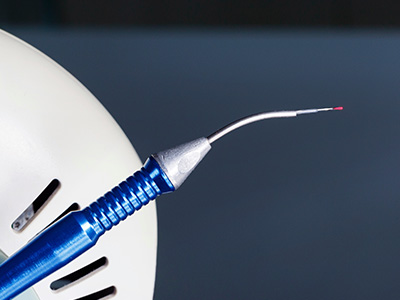
Diagnodent is a handheld laser device that helps dental professionals find decay before it becomes visible on X-rays or obvious during a visual exam. It works by directing a low-energy laser beam into the grooves and pits of a tooth; healthy enamel reflects the light differently than porous, demineralized areas. The instrument translates those reflections into a numeric reading and, in many practices, a simple audio signal that alerts the clinician to areas needing closer attention.
This technology is especially helpful in detecting decay that hides in deep fissures or between teeth—places that are often missed during routine inspections. Because Diagnodent measures changes in the tooth’s structure at a microscopic level, it can identify early-stage lesions when noninvasive or minimally invasive treatment options are still effective. Early detection means interventions can focus on prevention and preservation rather than extensive restorative work.
While Diagnodent is not a replacement for conventional examinations and radiographs, it is a valuable adjunct tool. Used alongside visual inspection, patient history, and X-rays when appropriate, it gives clinicians another data point to guide decisions about monitoring, fluoride therapy, sealants, or restorative procedures. That combined approach helps build a clearer picture of oral health, particularly for growing smiles.
Children’s teeth present unique challenges: newly erupted molars have deep grooves, and younger patients may not yet have fully developed oral hygiene habits. Diagnodent offers a noninvasive, quick method to screen susceptible areas without discomfort, making it well suited to pediatric care. Because the procedure is straightforward and painless, it can be used routinely during checkups without adding stress to the appointment.
For parents, Diagnodent adds reassurance by providing objective information about a child’s risk for decay. A numeric reading helps clinicians explain the condition and rationale for any recommended preventive measures in clear terms. When a clinician can show measurable evidence of early demineralization, families often feel more confident following through with targeted home-care instructions or in-office treatments designed to halt progression.
From a dental-team perspective, Diagnodent supports conservative care goals. When decay is caught early, clinicians can often apply topical fluoride, place or adjust sealants, and intensify preventive counseling rather than proceeding immediately to fillings. This aligns with pediatric dentistry’s emphasis on preserving natural tooth structure and minimizing treatment-related anxiety for young patients.
A Diagnodent screening is quick and easy. After a routine cleaning or exam, the clinician will dry the tooth surface to remove saliva and then gently move the device’s tip along the pits, fissures, and other areas of concern. The process usually takes only a few seconds per tooth and requires no drilling, injections, or special preparation. Because it’s noninvasive, it can be comfortably performed on infants, children, and teens.
The device provides a numeric value that corresponds to the likelihood of decay in the scanned area. Dentists interpret that number alongside visual findings and, when needed, radiographs to make an informed diagnosis. A low reading may indicate healthy enamel or a surface stain, while a higher reading can signal demineralization that may warrant closer monitoring or treatment. Clinicians consider the full clinical context—age, diet, fluoride exposure, and oral hygiene—when deciding next steps.
After the screening, your dental team will explain the findings in plain language and outline recommended options. This might include simple watchful waiting with periodic rechecks, applying fluoride varnish to strengthen enamel, placing or repairing a sealant, or scheduling a restorative visit if a lesion appears to be progressing. The goal is always to choose the least invasive, most appropriate measure to protect the tooth.
Diagnodent complements established preventive strategies rather than replacing them. Routine cleanings, fluoride treatments, dental sealants, and personalized home-care guidance remain the cornerstone of caries prevention. Diagnodent adds a layer of targeted detection that helps tailor those interventions to each child’s needs, allowing for more precise timing and selection of preventive steps.
For children with higher decay risk—due to diet, developmental grooves in molars, or previous cavities—regular Diagnodent screenings can be scheduled more frequently to catch changes early. For lower-risk patients, it may be used periodically to confirm that preventive measures are working. This individualized approach helps avoid both undertreatment and overtreatment by basing decisions on measurable findings.
Educational value is another important benefit. When clinicians use Diagnodent during visits, they can show parents and older children where enamel is vulnerable and why certain habits or treatments are recommended. That real-time feedback often improves compliance with brushing, flossing, and dietary suggestions because families understand the specific risks and the practical steps that reduce them.
Diagnodent is generally regarded as safe and effective as an adjunctive diagnostic tool. The laser energy used is very low and does not cause pain, heat, or radiation exposure. Its readings are reproducible when used correctly, and many clinicians value the device for its ability to highlight subtle changes in tooth structure that aren’t yet visible to the eye or on an X-ray.
However, like all diagnostic technologies, Diagnodent has limitations. Readings can be influenced by stains, calculus, and the presence of plaque, so proper cleaning and drying of the tooth are essential for accurate results. It may also give false positives or false negatives in certain scenarios; therefore, clinicians always interpret Diagnodent values in combination with other clinical information and diagnostic tools.
Experienced pediatric dental teams understand when Diagnodent adds meaningful information and when other methods are more informative. The strength of the tool is its role in a broader diagnostic strategy: it helps target attention to suspicious areas and supports earlier, more conservative care when appropriate, but it is not a standalone answer to every diagnostic question.
When families choose a practice that uses advanced tools thoughtfully, they benefit from a proactive approach to oral health that emphasizes prevention and minimally invasive care. At Myers Pediatric Dentistry & Orthodontics, we incorporate technology like Diagnodent into exams as part of a balanced, child-centered preventive program designed to protect developing smiles.
In summary, Diagnodent is a painless, practical adjunct that helps clinicians detect early decay and support conservative treatment choices. If you’d like to learn more about how this technology is used during your child’s routine visit or how it fits into a preventive care plan, please contact us for more information.


Diagnodent is a handheld laser device that detects changes in tooth structure by measuring how light is reflected and fluoresced by enamel and dentin. The clinician directs a low-energy laser into pits, fissures and other areas of concern and the instrument converts the returning signal into a numeric readout and often an audio cue. That numeric value helps highlight microscopic demineralization before it becomes visible on radiographs or during a visual exam.
Because Diagnodent senses early structural changes, it supports prevention and minimally invasive options rather than waiting for larger cavities to form. Clinicians use the device as one data point along with visual inspection, patient history and radiographs when necessary to form a diagnosis. The combined approach improves the ability to detect and manage early lesions in developing smiles.
Diagnodent is especially useful in pediatric dentistry because newly erupted molars often have deep grooves that trap food and bacteria and can hide early decay. The screening is painless, quick and noninvasive, which helps reduce stress for infants, children and teens during routine visits. Because the test requires no anesthesia or drilling, it can be performed regularly without adding discomfort to the appointment.
For families, the numeric readout provides objective information that helps explain why a clinician might recommend fluoride, sealants or closer monitoring. At Myers Pediatric Dentistry & Orthodontics, clinicians use Diagnodent readings alongside other exam findings to communicate risk and tailor home-care instructions. This evidence-based communication helps parents understand preventive options and follow recommended steps.
A Diagnodent screening typically follows a routine cleaning or exam and requires no special preparation from the child. The clinician will dry the tooth surface to remove saliva and gently move the device tip along pits, fissures and other suspicious areas, taking only a few seconds per tooth. The procedure is comfortable for most patients and can be performed on children of all ages.
The device provides a numeric value that the dental team interprets with visual findings and any appropriate radiographs to determine next steps. Based on the combined assessment, options may include periodic rechecks, topical fluoride application, sealant placement or restorative care if progression is evident. Your dental team will explain the results and the recommended plan in straightforward terms so families understand the rationale.
Diagnodent is considered safe because it uses very low-energy laser light and does not expose patients to ionizing radiation. When used correctly on clean, dry tooth surfaces, readings are reproducible and can reveal subtle structural changes that precede visible cavities. The technique itself is painless and does not generate heat, making it appropriate for routine pediatric screenings.
Limitations include sensitivity to surface stains, plaque and calculus, which can skew readings if teeth are not properly cleaned and dried. The device can produce false positives or false negatives in certain situations, so clinicians always interpret Diagnodent data in the context of the full clinical exam and radiographs when indicated. Experienced pediatric teams understand when Diagnodent adds meaningful information and when other diagnostic methods are more informative.
Diagnodent excels at detecting demineralization in pits and fissures on the chewing surfaces of molars and premolars, where decay often begins. It is less reliable for detecting interproximal decay between teeth, a location where bitewing radiographs commonly provide better visualization. Because each tool has diagnostic strengths and weaknesses, many clinicians use both modalities for a comprehensive assessment.
If Diagnodent indicates an elevated reading near an interproximal area, the clinician will often confirm findings with radiographs or targeted visual checks to avoid misinterpretation. Combining multiple diagnostic approaches ensures hidden lesions are not missed and unnecessary treatment is minimized. This balanced strategy supports accurate diagnosis while preserving healthy tooth structure whenever possible.
Frequency of Diagnodent screening is determined by individual risk factors such as past cavities, oral hygiene habits, diet and fluoride exposure. Children at higher risk for decay may benefit from more frequent screenings at routine recall visits, while lower-risk patients may be screened less often as part of standard checkups. The dental team creates a schedule tailored to each child’s preventive needs.
Routine cleanings, fluoride treatments and personalized home-care guidance remain the foundation of preventive care, and Diagnodent is used to complement those services rather than replace them. The device can also monitor suspicious areas over time, helping clinicians decide when to intervene and when to continue noninvasive management. Individualized scheduling helps avoid overtreatment while catching evolving problems early.
Diagnodent readings are reported as numbers that correspond to the degree of fluorescence detected in the scanned area, with higher values suggesting greater demineralization. Exact threshold values and clinical protocols can vary by device and practice, so clinicians rely on established guidelines and professional judgment when interpreting results. Repeated measurements over time are useful for tracking whether a lesion is stable, improving or progressing.
When interpreting a reading, the dental team considers the child’s age, diet, fluoride exposure and dental history to form a complete picture of risk. A single elevated reading does not automatically mean a filling is necessary; the clinician evaluates all evidence before recommending preventive or restorative steps. Clear communication with parents about what the numbers mean helps families follow through with targeted home care or in-office treatments.
No. Diagnodent is an adjunctive diagnostic tool and does not replace visual examination or radiographs, each of which contributes different information to the diagnostic process. Visual exams identify clinical signs on the tooth surface and soft tissues, radiographs reveal interproximal and sub-surface lesions, and Diagnodent adds sensitivity for early enamel changes in pits and fissures. Using these methods together provides a more complete assessment than any single tool alone.
Because no diagnostic method is perfect, clinicians combine data from multiple sources to reduce the likelihood of missed lesions or unnecessary treatment. Diagnodent can sometimes detect early demineralization before it appears on X-rays, prompting preventive steps that may avert more invasive care. The overarching goal is to base interventions on multiple data points and to choose the least invasive effective option for each child.
Early detection with Diagnodent can support preventive measures such as topical fluoride, sealants and intensified home-care instructions aimed at remineralizing enamel and stopping lesion progression. When demineralization is identified and managed promptly, many children avoid the need for fillings or other restorative procedures. This conservative focus aligns with pediatric dentistry’s priority to preserve natural tooth structure whenever possible.
If a lesion continues to progress despite preventive efforts, the dental team will recommend appropriate restorative treatment while still applying minimally invasive techniques when feasible. Diagnodent helps clinicians time interventions more precisely by distinguishing areas that warrant monitoring from those that need prompt treatment. Parents receive clear explanations so they understand why a conservative or restorative approach is advised.
Myers Pediatric Dentistry & Orthodontics integrates Diagnodent into routine exams to personalize preventive care and to identify early enamel changes in developing teeth. The device helps clinicians decide when to apply sealants, recommend topical fluoride or schedule more frequent monitoring based on measurable findings. Incorporating Diagnodent supports the practice’s focus on prevention and minimally invasive care tailored to each child.
Beyond clinical decision making, Diagnodent serves an educational role by allowing clinicians to show parents and older children where enamel is vulnerable and why specific habits or treatments are advised. This real-time evidence often improves compliance with brushing, flossing and dietary recommendations because families can see objective signs of risk. The practice emphasizes clear communication so parents leave with practical steps to protect their child’s smile.

Ready to schedule your child’s next dental visit or have questions about our services?
Contacting Myers Pediatric Dentistry & Orthodontics is simple! Our friendly team is here to help with scheduling appointments, explaining treatments, and answering any questions you may have. Whether you’d like to call, email, or use our easy online form, we’re ready to make your child’s dental experience positive and stress-free. Reach out today and give your little one a healthy, happy smile!

Back to top