New Patients
Existing Patients
New Patients
Existing Patients
New Patients
Existing Patients
New Patients
Existing Patients


Digital panoramic x-rays are a single, wide-view radiographic image that captures the entire dental arch — upper and lower jaws, all teeth, the temporomandibular joints (TMJ), and the maxillary sinuses — in one sweep. Unlike intraoral bitewing or periapical films that focus on a few teeth at a time, a panoramic image shows relationships across the whole mouth, helping clinicians see how structures align and interact. This bird’s-eye perspective is especially useful when evaluating growth, eruption patterns, and structural anatomy in children and adolescents.
Because the image is produced digitally, clinicians can view, enlarge, and enhance the image immediately on a screen. Digital acquisition speeds up the diagnostic process and allows for straightforward integration into electronic patient records. The resulting panoramic image is a diagnostic tool—not a substitute for more focused images when those are needed, but a comprehensive starting point that guides further evaluation and treatment planning.
At Myers Pediatric Dentistry & Orthodontics, panoramic imaging is used as part of a measured diagnostic approach. When combined with a clinical exam and, if necessary, supplemental intraoral images or CBCT scans, panoramic x-rays give the dental team a fuller understanding of a child’s oral development and any underlying issues that may not be visible during a visual exam alone.
The panoramic process is quick and child-friendly. The patient stands or sits upright while a rotating arm sweeps a digital sensor around the head. The entire exposure typically takes less than a minute, with the actual x-ray emission lasting only a fraction of that time. Because the sensor is outside the mouth, the procedure is often more comfortable for young patients who may have difficulty tolerating intraoral films or sensors.
Technicians position the head using simple alignment markers, and removable objects such as glasses or jewelry are taken off to prevent artifacts on the image. Staff members remain behind a protective barrier or leave the room during exposure and use modern, calibrated equipment to capture a clear, diagnostically useful image. The immediate digital file can be reviewed with caregivers right after the scan so the team can explain findings in real time.
Panoramic imaging is especially helpful for assessing tooth eruption, identifying impacted teeth, and spotting developmental anomalies. If a focused view is needed—such as to examine a single tooth or detect early decay—the dentist may follow up with intraoral radiographs. The panoramic study helps the clinician determine when additional, more detailed imaging is warranted.
A panoramic x-ray gives clinicians a big-picture view that supports multiple aspects of pediatric dental care and orthodontic planning. It is commonly used to monitor the position of permanent teeth before, during, and after eruption; to evaluate the presence of supernumerary (extra) or missing teeth; and to identify abnormalities in jaw growth or tooth formation. This makes panoramics a frequent choice during initial orthodontic assessments and routine developmental checkups.
Because panoramic images show both jaws and the surrounding skeletal structures, they assist in detecting large-scale conditions such as cysts, tumors, or significant bone changes that would be difficult to appreciate on small intraoral films. For orthodontists and pediatric dentists, panoramics help map the timing of interventions and coordinate care between specialties by showing how teeth and jaws relate to one another.
In many cases, a panoramic image reduces the need for multiple separate films, streamlining the diagnostic process while preserving clinical insight. The image can also serve as a baseline reference to track changes over time, making it valuable for long-term treatment planning and monitoring growth patterns in young patients.
Radiation safety is a core consideration in pediatric imaging. Digital panoramic systems use highly sensitive detectors that require lower radiation doses than older film-based equipment. Dental professionals follow the principle of ALARA — “as low as reasonably achievable” — which means exposures are limited to what is necessary to obtain diagnostic-quality images. Protective measures such as lead aprons and thyroid collars are used when appropriate to minimize any incidental exposure.
Imaging decisions are individualized. Clinicians weigh the diagnostic benefit against the minimal exposure and select the least invasive option that will yield the information needed for safe care. For routine care, panoramic x-rays are recommended only when they will influence diagnosis or treatment decisions; otherwise, imaging is deferred to avoid unnecessary exposure. Parents are encouraged to discuss any concerns with the dental team so the imaging plan can be tailored to the child’s needs.
Because digital panoramics are fast and noninvasive, they are particularly well suited to younger patients who benefit from shorter, simpler visits. When more detailed three-dimensional imaging is necessary, such as a CBCT scan, the clinician will explain why the additional study is indicated and how it complements panoramic findings.
Interpreting a panoramic x-ray requires clinical training and experience. The image provides clues about tooth position, root development, jaw symmetry, and anatomical landmarks, but it also has inherent limitations: distortion and overlapping structures can obscure fine details. That’s why dentists correlate panoramic findings with a clinical exam and, when needed, targeted intraoral radiographs or three-dimensional imaging for precise measurements.
When a panoramic image reveals areas of concern—such as delayed eruption, impacted teeth, or asymmetries—the dental team discusses next steps with families and, where appropriate, coordinates care with orthodontic specialists. Panoramics aid in timing orthodontic intervention, planning extractions if necessary, and identifying conditions that require surveillance or referral. Because the image is stored electronically, it can be shared with other providers involved in the child’s care for collaborative planning.
Clear communication is part of the process: clinicians review the panoramic image with parents and explain what the key findings mean for their child’s oral health and development. This shared understanding helps caregivers make informed decisions about follow-up imaging, preventive measures, and treatment options when they are needed.
Wrap-up: Digital panoramic x-rays are a practical, efficient diagnostic tool that offers an overarching view of a child’s oral and skeletal anatomy. They support early detection of developmental issues, guide orthodontic and dental treatment planning, and integrate smoothly with digital patient records. If you’d like to learn more about how panoramic imaging might be used in your child’s care at Myers Pediatric Dentistry & Orthodontics, please contact us for more information.


Digital panoramic X-rays are single, wide-view radiographic images that capture the upper and lower jaws, all erupted and developing teeth, the temporomandibular joints and adjacent sinus areas in one sweep. The image is produced by a rotating arm and a digital sensor outside the mouth, which creates a comprehensive, two-dimensional representation of the entire dental arch. Because the file is digital, clinicians can view, enlarge and enhance the image immediately to aid diagnosis and discussion with caregivers.
Panoramics provide a bird’s-eye perspective that is especially useful for assessing growth, eruption patterns and large-scale structural relationships in pediatric patients. They are a diagnostic starting point rather than a replacement for more focused imaging when fine detail is required. Used appropriately, panoramic X-rays help guide further evaluation and treatment planning.
Panoramic X-rays show a broad external view of the jaws and teeth, while intraoral radiographs such as bitewings and periapicals focus on small, high-resolution areas inside the mouth. Intraoral films are better for detecting early cavities, fine root detail and precise bone levels, whereas panoramics excel at revealing overall tooth position, jaw relationships and developmental issues. Each modality has strengths and limitations, and clinicians select the appropriate study based on the diagnostic question.
Because the panoramic image covers such a large area, it can exhibit distortion and overlapping structures that limit evaluation of fine details. For that reason, a panoramic study is often used in combination with intraoral images when a detailed view of a specific tooth or small area is necessary. Together, these images give a complete picture for accurate diagnosis and treatment planning.
The panoramic process is quick and generally comfortable for children. The patient stands or sits upright while the machine’s arm rotates around the head and the external sensor captures the image, so nothing is placed inside the mouth and the exposure itself lasts only a fraction of a minute. Dental staff use positioning guides to align the head and remove items such as glasses or jewelry to prevent artifacts on the image.
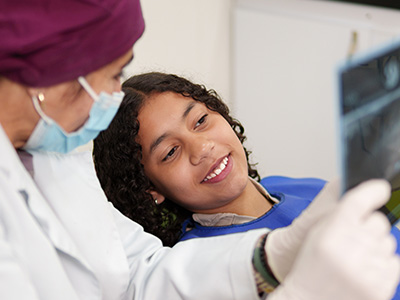
Technicians remain behind a protective barrier or outside the room during exposure and operate modern, calibrated digital equipment to ensure clarity. The resulting image appears immediately on a screen so the dental team can review findings with caregivers right away. If the child is anxious, staff use calming techniques and child-friendly explanations to make the visit smooth and predictable.
Safety is a central concern in pediatric imaging, and digital panoramic systems use sensitive detectors that require lower radiation doses than older film-based units. Dental professionals follow the principle of ALARA — as low as reasonably achievable — and take steps such as using lead aprons or thyroid collars when appropriate to minimize incidental exposure. Modern equipment, proper technique and judicious imaging decisions together help keep doses very low.
Imaging is individualized and recommended only when the diagnostic benefit outweighs any exposure risk. Clinicians limit imaging to studies that are likely to influence diagnosis or treatment, and they discuss concerns with caregivers so the imaging plan fits the child’s needs. For complex cases that require additional detail, the dental team will explain why a supplemental study is necessary and how it complements the panoramic findings.
Panoramic X-rays are commonly recommended during initial orthodontic assessments, routine developmental checkups and when there are concerns about tooth eruption or jaw growth. They are useful for identifying impacted or missing teeth, extra (supernumerary) teeth, and for evaluating large-scale developmental anomalies or pathology that would be difficult to appreciate on intraoral films. Panoramics also serve as a baseline image to monitor changes over time during growth and treatment.
Clinicians weigh the clinical indication before ordering a panoramic study and avoid routine imaging when it will not alter management. In many situations a single panoramic image can reduce the need for multiple separate films, streamlining the diagnostic process while preserving essential information. If a focused problem is identified, the dentist may follow up with targeted intraoral radiographs or three-dimensional imaging as needed.
Panoramic X-rays can reveal issues that are not visible during a visual exam, including unerupted or impacted teeth, supernumerary teeth, abnormal tooth development and large cysts or other jaw lesions. They also show the relationship between the jaws and teeth, which is helpful for detecting asymmetries, growth disturbances and some types of trauma that affect bone structure. These findings often guide timing of interventions and the need for specialist referral.
While panoramics are excellent for broad screening, they have limitations for detecting small cavities, early bone loss or subtle root fractures due to overlap and reduced resolution compared with intraoral images. Dentists correlate panoramic findings with a clinical exam and order targeted radiographs or CBCT scans when finer detail is required. This layered approach ensures thorough evaluation while minimizing unnecessary exposure.
Interpreting panoramic X-rays requires clinical training and experience; dentists examine tooth position, root development, jaw symmetry and recognizable anatomic landmarks to form a diagnostic impression. Because the image can show large-scale relationships across both jaws, it plays a central role in planning orthodontic timing, determining whether extractions are needed and identifying cases that merit referral to specialists. Clinicians integrate panoramic findings with the oral exam and patient history to create a coordinated treatment plan.
When panoramics reveal concerns, the dental team discusses next steps with caregivers and explains how additional imaging or monitoring will contribute to care. The image can be stored electronically and shared with other providers to support collaborative planning. Clear communication about findings and recommended follow-up helps families make informed decisions about their child’s care.
Additional imaging is ordered when the panoramic study identifies an area that requires higher resolution or three-dimensional detail. For example, focused intraoral radiographs are preferred to evaluate early cavities, precise root anatomy or localized infections, while cone beam CT (CBCT) may be indicated for complex surgical planning, assessment of impacted teeth in three dimensions or evaluation of airway or skeletal issues. The choice depends on the specific clinical question and the level of detail needed for safe treatment.
Clinicians explain why supplementary imaging is recommended and how it will influence management, taking care to select the least invasive study that provides the necessary information. Parents are encouraged to ask about the purpose and benefits of any additional scan so they understand how it supports diagnosis and treatment decisions. This stepwise approach balances diagnostic value with prudent use of imaging resources.
Digital panoramic images are saved directly into the patient’s electronic chart, allowing clinicians to review, annotate and compare them with prior studies during appointments. This integration speeds diagnosis, supports coordinated care between providers and enables the team to show and explain findings to caregivers in real time. Electronic storage also makes it easy to provide copies to specialists involved in a child’s care when collaborative planning is needed.
Because the files are digital, clinicians can enhance contrast, crop areas of interest and measure relationships for treatment planning while preserving the original image. Secure handling and controlled access to the electronic record help protect patient information as the dental team uses the images to guide safe, informed treatment decisions. Families can expect clear explanations of findings and how the image fits into the overall care plan.
Parents can help by explaining the procedure in simple, positive terms and by reinforcing that the machine will move around the head without anything going in the mouth. Before the exam, removable items such as glasses, hair clips and jewelry should be taken off, and caregivers should follow any specific instructions from the dental team. The short, noninvasive nature of the test typically makes it well tolerated by most children.
After the scan, the dental team reviews the image with the family and discusses any findings along with recommended next steps, which may include routine monitoring, targeted radiographs or specialist referral. Caregivers are encouraged to ask questions about what was seen, why further imaging might be needed and how the results influence treatment decisions. If you would like more information about panoramic imaging or how it may be used in your child’s care, contact Myers Pediatric Dentistry & Orthodontics and the team will explain the process and answer your questions.

Ready to schedule your child’s next dental visit or have questions about our services?
Contacting Myers Pediatric Dentistry & Orthodontics is simple! Our friendly team is here to help with scheduling appointments, explaining treatments, and answering any questions you may have. Whether you’d like to call, email, or use our easy online form, we’re ready to make your child’s dental experience positive and stress-free. Reach out today and give your little one a healthy, happy smile!

Back to top