New Patients
Existing Patients
New Patients
Existing Patients
New Patients
Existing Patients
New Patients
Existing Patients


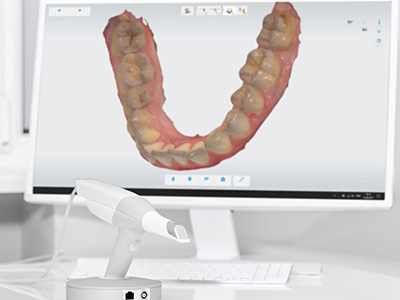
The iTero® HD2.9 Scanner replaces messy putty impressions with a fast, contactless digital capture that is especially well-suited for children. Instead of bulky trays and impression material that can trigger gagging or leave an unpleasant taste, the scanner uses a small wand to record the shape of the teeth and soft tissues. For parents and young patients, that means a more calm, predictable experience at the chair — and fewer moments of anxiety during routine and restorative visits.
Because the scanner captures a continuous stream of data, our clinicians can stop, revisit, and refine any area in real time. This iterative approach reduces the need for repeat impressions and helps ensure the data we send to a lab or aligner provider is accurate the first time. In a pediatric setting, where cooperation windows can be short, that efficiency translates directly into more complete, higher-quality results in fewer visits.
From an infection-control perspective the digital workflow is simpler: no impression materials to handle, disinfect, or dispose of, and no impression casts to store. The streamlined process supports a cleaner, more organized operatory while maintaining the high standards families expect for safety and hygiene.
The HD2.9 provides high-resolution, three-dimensional models of the mouth that clinicians can rotate, zoom, and measure with precision. These detailed visualizations help our dentists and orthodontists evaluate tooth position, spacing, and eruption patterns with a level of clarity that’s difficult to achieve with traditional impressions. Better visualization supports more informed clinical decisions and more predictable treatment outcomes for both preventive and restorative care.
Digital scans feed directly into modern treatment software, allowing seamless integration with restorative labs and aligner manufacturers. That connectivity reduces transcription errors and shortens the time between diagnosis and the start of treatment. For pediatric patients, faster turnaround often means less waiting for appliances like space maintainers, crowns, or clear aligners, which helps keep treatment on track as kids grow.
Beyond single-tooth restorations, the scanner’s measurements assist with occlusion assessment and monitoring developmental changes across visits. Clinicians can archive scans and compare them over time, providing an objective record of progression that supports early intervention when needed and helps tailor care to each child’s changing needs.
Comfort is a major consideration when treating children, and the iTero HD2.9 was designed to minimize discomfort during scanning. The wand is lightweight and ergonomically shaped, and scans are performed while the child breathes and swallows normally. Because the system relies on optical imaging rather than ionizing radiation, it is safe for routine use and appropriate for repeated captures when monitoring development or progress.
Many children respond positively to the noninvasive nature of a digital scan compared with traditional impression techniques. The scan is quick and unobtrusive, making it easier for the clinical team to build rapport and keep young patients at ease. This reduced stress can be particularly helpful for first-time dental visits and for kids who are sensitive to new sensations in the mouth.
Clinician training and a child-centered approach ensure scans are performed efficiently and respectfully. Our team uses age-appropriate language and techniques to explain the process, which helps children understand what to expect and cooperate more readily. The result is a safer, more positive experience that supports long-term oral health habits.
One of the most practical advantages of the iTero HD2.9 is the immediacy of the data it produces. Scans are viewable on-screen as they are captured, which lets clinicians and families review the 3D model together. Real-time visualization improves shared decision-making by helping caregivers see what the clinician sees — from alignment concerns to areas that may need preventive attention.
The digital workflow also accelerates communication with dental laboratories and orthodontic partners. Files can be sent electronically in standardized formats, which shortens manufacturing times for appliances and restorations. For busy families, this efficiency often means fewer appointments and less time away from school or work while waiting for treatment components to arrive.
Clinicians benefit from smoother case management, too. Digital records are easier to store, retrieve, and compare across visits, enabling proactive follow-up and coordinated care across specialties. The result is a more reliable path from diagnosis to treatment — one that emphasizes clarity, predictability, and timely progress for each child’s smile.
At our practice, digital scans are an integral part of both orthodontic and restorative treatment planning. For orthodontics, the high-resolution models support accurate aligner prescriptions and bracket positioning, helping create predictable tooth movement in a shorter, more comfortable process. For restorative work, scans allow us to design crowns, onlays, and custom appliances that fit precisely and function well within a child’s bite.
Scans are also valuable for monitoring dental development over time. By comparing sequential 3D images, our clinicians can track eruption patterns, arch growth, and space changes, enabling timely interventions like space maintenance or early orthodontic guidance. This proactive approach helps preserve healthy development and can simplify future treatments.
Integration with collaborative software makes it easy to coordinate care with specialists when more complex cases arise. We can share scans with pediatric specialists, orthodontists, and labs to streamline treatment planning while maintaining continuity of care. That collaborative capability supports comprehensive solutions tailored to each patient’s needs.
Summary — The modern alternative to impressions, the iTero® HD2.9 Scanner adds precision, comfort, and efficiency to pediatric dental care. Its noninvasive, high-definition scans help our team plan treatment with greater confidence and keep young patients more relaxed during visits. To learn more about how we use digital scanning in diagnosis and treatment, or to discuss whether a scan is right for your child, please contact us for more information.


The iTero HD2.9 scanner is a high-definition intraoral imaging system that captures continuous optical scans of teeth and soft tissues using a small handheld wand. The device records a stream of data that is processed into a three-dimensional model the clinical team can rotate, zoom and measure with precision. Because the scanner captures digital information rather than physical impressions, it eliminates the need for bulky trays and impression material.
Scans are produced in real time, allowing clinicians to pause, revisit and refine any area during the capture process. The resulting 3D files integrate directly with modern dental software used by laboratories and orthodontic manufacturers. This digital workflow reduces transcription steps and supports more predictable transfers from diagnosis to appliance or restoration fabrication.
The iTero HD2.9 replaces messy impression putty and large trays with a lightweight wand, which many children find less intrusive and easier to tolerate. Scanning is noninvasive and typically performed while the child breathes and swallows normally, reducing gagging and unpleasant tastes commonly associated with traditional impressions. The shorter, quieter capture also helps keep young patients calmer during routine and restorative visits.
Because scans are faster and may require fewer repeat captures, visits can be more predictable and less stressful for both children and caregivers. Clinicians can explain the process in age-appropriate language while showing the live 3D model, which helps demystify the exam and build cooperation. The overall result is a smoother experience that supports positive dental visits for kids.
The iTero HD2.9 uses optical imaging rather than ionizing radiation, making it appropriate for routine and repeated scans in a pediatric setting. The wand is ergonomically designed and scans are performed quickly, which minimizes time in the mouth and supports safe, repeatable monitoring of dental development. Clinicians follow established protocols to ensure each capture is performed efficiently and respectfully.
Because the system captures noninvasive images, it is well-suited for longitudinal tracking of eruption patterns, arch growth and treatment progress without exposing children to additional radiation. Training and experience allow the clinical team to tailor the scanning approach for each child, maintaining comfort and safety across multiple visits. The digital workflow also reduces the handling of impression materials and casts, which supports a more hygienic operatory.
Digital scans produce high-resolution 3D models that let clinicians evaluate tooth position, spacing and occlusion with a level of clarity that is difficult to achieve with traditional impressions. Measurements can be taken directly on the model and used to inform restorative margins, crown design and orthodontic prescriptions. This precise visualization supports more confident clinical decisions and predictable outcomes.
Scans integrate with treatment planning software and laboratory workflows, reducing manual transcription and the potential for errors. Archived digital records also allow clinicians to compare sequential scans over time, enabling objective monitoring of development and early identification of emerging issues. That capability supports timely interventions and more personalized care plans for growing patients.
Yes, the iTero HD2.9 is compatible with many contemporary orthodontic systems, including clear aligner workflows, by producing the accurate digital models those systems require. The high-definition scans support precise aligner prescriptions and guide bracket positioning when fixed appliances are indicated. Electronic transfer of scan data to aligner manufacturers or orthodontic labs streamlines the production process.
Because the scanner delivers detailed, standardized files, clinicians can often shorten the time between diagnosis and the start of appliance therapy. The ability to monitor progress with follow-up scans helps inform midcourse adjustments and confirms treatment milestones. This integration contributes to a more efficient and predictable orthodontic experience for children and teens.
The immediacy of iTero scans—viewable on-screen as they are captured—reduces the need for repeat impressions and allows clinicians and families to review findings together during the appointment. Electronic transmission of files to laboratories and appliance manufacturers shortens fabrication times and limits back-and-forth logistical delays. For families, that often translates into fewer return visits and less time away from school or work.
Digital records are also easier to store, retrieve and compare across visits, which improves case management and coordination among specialists. Streamlined workflows free up clinical time and reduce administrative complexity, helping the practice deliver timely, well-coordinated care. The net effect is a more predictable and efficient path from diagnosis to treatment for each child.
The iTero HD2.9 supports an iterative capture method that lets clinicians pause, reposition and refine areas in short, focused passes, which is especially useful when cooperation windows are limited. Scans can be completed in brief segments so a child can rest or respond to calming strategies between captures. Clinicians combine this capability with age-appropriate communication and behavioral techniques to increase comfort and cooperation.
Scheduling scans at times when the child is most likely to be cooperative, such as earlier in the day, can also improve success. The clinical team is trained to use distraction, demonstration and positive reinforcement to make the process predictable and nonthreatening. When needed, clinicians document and adapt future appointments to the child’s needs so subsequent captures proceed more smoothly.
A digital workflow removes the need for impression materials that must be handled, disinfected and disposed of after use. That reduction in physical materials lowers the number of fomites introduced into the operatory and simplifies infection-control protocols. The scanner also eliminates the need to store impression casts, which reduces handling of physical items that would otherwise require storage and management.
The wand uses single-use barriers and the device surfaces are designed for routine cleaning between patients, which supports standard clinical hygiene practices. Electronic file transfer eliminates physical shipment of impressions, further reducing contact points between practices and outside labs. Together these features support a cleaner, more organized operatory while maintaining patient safety.
Scans from the iTero HD2.9 are saved as digital files within the practice’s patient record system and can be exported in standardized formats accepted by laboratories and specialists. Electronic transfer helps reduce transcription errors and accelerates the delivery of appliances and restorations. Secure handling of digital records allows clinicians to archive and retrieve images for comparison across visits.
When coordination with outside providers is needed, files can be transmitted electronically in formats that preserve the detail required for precise fabrication. This streamlined sharing improves collaboration with pediatric specialists, orthodontists and labs while maintaining continuity of care. Clinicians can then use the archived scans to monitor progress and make data-driven adjustments to treatment plans.
At our Middleburg and Jacksonville offices, the iTero HD2.9 is incorporated into preventive, restorative and orthodontic workflows to improve accuracy and patient comfort. The scanner supports crown and appliance design, aligner prescriptions and longitudinal monitoring of eruption and arch development. Real-time visualization allows clinicians and caregivers to review findings together and make informed decisions during the visit.
Our team uses the scanner as part of a child-centered approach that emphasizes efficient, respectful captures and clear communication. Clinicians archive scans to track developmental changes and coordinate care with specialists when necessary. Parents are encouraged to ask the clinical team how digital scanning may benefit their child during routine exams or treatment planning.

Ready to schedule your child’s next dental visit or have questions about our services?
Contacting Myers Pediatric Dentistry & Orthodontics is simple! Our friendly team is here to help with scheduling appointments, explaining treatments, and answering any questions you may have. Whether you’d like to call, email, or use our easy online form, we’re ready to make your child’s dental experience positive and stress-free. Reach out today and give your little one a healthy, happy smile!

Back to top